Showing posts with label Braga. Show all posts

Thursday, 21 August 2014

CONVERSATION WITH MINNA STENROOS


Many of our readers will know Minna from her work on Ringu Tulku Rinpoche's teachings on the The Way of the Bodhisattva (Bodhicharyavatara) by Shantideva, the eighth century Buddhist monk and scholar.

We are sitting on the bus taking us from the Bodhicharya Summer Camp in Casa da Torre to Braga in northern Portugal.  All around us is chatter and laughter and the sound of children having a wonderful time.

Minna says that in her home town in Helsinki, Finland, there is a Bodhicharya Study Group which has been running for about 6-years.  There is also a Palpung Centre to which Rinpoche attends when he is invited.  Besides these, there is a Samye Dzong and a Nyingma Centre.  In the Study Group, there are only five-people, but maybe this is because there are also so many other Buddhist activities in the city​, she tells me.

When the conversation turns to Ringu Tulku Rinpoche, Minna says, There was a time in my life when everything was quite sorted out and everything was going nicely and I had moved from another town to Helsinki. My son was about seven-years old and he went to his first class in school and we had a nice place to live and I had nice work.  Everything was there.

What was it that brought a change to her life?

I had a dream where I met a person, some young man.  Although I didn't know who he was, I felt that I knew him and I was very happy in that dream.  I was sorry because I knew it was only going to be a very brief meeting and before I woke up, I heard a voice in the air saying "Karmapa, Karmapa, Karmapa".  And when I woke up, I thought, "This is something!  This is really amazing!  What is Karmapa?"  I really didn't know.  Then I googled and read about him.  I saw a film made by a Finnish director.  It was a documentary about two Karmapas.  I don't remember the name of the film but that's how I found out about this whole Karmapa situation.  When I saw the two Karmapas, I immediately knew which one it was.  That was my dream.

Ten-years ago, when HH Karmapa was 19-years old, Meena had some knowledge about Buddhism, but it was mainly academic.  She started to read more and more books about the subject, including Sagyal Rinpoche's The Tibetan Book of Living and Dying and her interest in the subject increased.  She then became familiar with meditation techniques, especially  tonglen.  At this stage, Meena felt she had to find a Buddhist teacher and found out that two-Tibetan teachers were visiting Finland, one of them having a connection with the  Karmapa - Ringu Tulku Rinpoche who was vising the country for the first time.  I found the Bodhicharya website and found a lot of information that was very important for me.  I saw photos and pictures of people and years later, when I eventually met them, I felt that I had known them.
As far as my family and friends were concerned, they had no objection about my interest in Buddhism.  
The meeting with Ringu Rinpoche was quite a big thing for me.  I took refuge immediately when he came and I started meditating much more, being inspired and enthusiastic.  But  another two-years passed  before Meena met him again.

With Karmapa's promotion of vegetarianism, I wondered if Meena had been influenced by his cause - to impact a change in the diet of Buddhists.  I used to be a vegetarian for a few years after Karmapa asked everyone to make some kind of commitment towards changing.  I raised my hand when he gave the option of being vegetarian for some time and I decided I'd do three-years,  so I lifted my hand.  Then I got an eye problem and it was recommended I eat some fish with fatty acids.   So now I'm not vegetarian.  Also, when my family cook I sometimes eat meat.

With so much fighting in the world today, it's difficult to ignore what's going on and not have an opinion about the causes of conflict. Minna has her own take on this.  I'm convinced wars are caused by our mind's negative emotions and our not understanding them; not understanding our responsibility which is the same as our freedom, actually.  We don't understand it because nobody told us and we didn't try.  Sometimes I wonder where the bad people are because in my daily life I rarely meet anybody cruel; I rarely meet anybody who is fighting with others; I have hardly met anybody killing or hating another.  But actually, we all have that capacity.  I think that meditation, of course, gives me space and mindfulness and awareness to notice it at the very early stage, so it doesn't grow too big and confused.  It can also lead to uprooting the cause of conflict.

​As the bus draws nearer to Braga, Meena comments on the feeling of removal, of distance, the people have regarding politicians: One of the reasons there is war is because the people are not how we see the politicians.   There is war and injustice because we create images of other people, including politicians  We keep and hold on to those images that we have instead of just meeting the actual people - who are just like us.  We do so, perhaps, because we think it makes life simpler:  but actually, it makes it possible for us to objectify others and see them as something less, or more than a normal human being - just like myself.  That's also how we get our own identity.
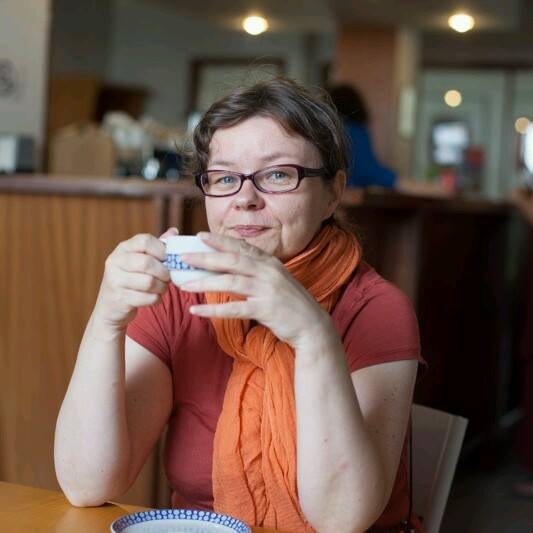
Francois Henrard

Photo by Francois Henrard


Minna is a student of Ringu Tulku since 2004. She lives in Helsinki, Finland, with her grown-up son. She is involved with Bodhicharya International website and  with coordinating the Online Shedra.

Thursday, 7 August 2014

CONVERSATION WITH TANYA


We are sitting in the quiet quadrangle of Casa da Torre.  There is the  sound of birds in the distance.  In the centre of the square is a white statue of Saint Mary, mother of Jesus.  The Casa da Torre is situated four miles north of Braga in Portugal and is a Jesuit centre for Spirituality and Culture. We are attending Ringu Tulku's summer camp and people from many different countries have arrived to listen to the teachings on Mahamudra - The Moonlight by Dakpo Tashi Namgyal.

On the bench beside me is Tanya:  born in Croatia, having been brought up in Bosnia before moving  to Serbia, she speaks to me in an Eastern European accent, I like to say I'm from Yugoslavia.

I met Ringu Tulku Rinpoche in Boulder, Colorado where I lived for about eight-years or so.  I met him in 1998.  Tanya was there with her husband who wanted to study at Naropa University.  Not being interested in Buddhism at that time, although she was interested in studying dharma, while he studied, Tanya worked as a nurse in a hospital, .  However, she did meet some of the senior students of Chogyam Trungpa Rinpoche while she was in Boulder, but because of her lack of English at that time,  her understanding of Buddhism was limited.


This is where she met Ringu Tulku Rinpoche during one of his annual teachings at Naropa University.  About taking refuge, Tanya remarked, I took refuge, actually, not with Ringu Tulku Rinpoche, with with one of the senior students of Chogyam Rinpoche in 2000.  Tanya continued her work as a nurse at the weekends while undertaking study at the University.

Tanja with Rinpoche


Since leaving the US eight_years ago, Tanya hasn't worked as a nurse but during that time did a three and a half-year retreat with Rinpoche in Sikkim.  The schedule was very strict and we tried to follow as much as we were able to with a little modification that was done by Ringu Tulku and HH Karmapa.  There was a little less yidam practice and a little more Mahamudra and the six yogas of Naropa

During this time, Tanya didn't leave the retreat.  I was lucky to not have to leave for a visa or for health reasons like some other people.  Although seventeen-retreatants began, only eight finished.  At the end of her retreat, Tanya says, I was ready to leave.  I thought it was OK to finish at that time.  I was happy to see my family.  I also had some unfinished karmic business.  

For some time after leaving the retreat, Tanya felt like going back and doing another retreat.  She said, After the first year which was very difficult, the second and third years were just, more or less, pure joy.  Not having to worry about anything but your practice, at some point, becomes really joyful and beautiful.  So yes, of course, after that you meet the outside world which is a little harsh, anyway, you want to go back. But that's not the way for everybody - maybe for some people.

About events that were taking place outside of the retreat, Tanya says, We knew that in 2008 there was the election in USA, so Rinpoche kept us informed.  A few other things like that.  Because I think he knew this was the first traditional two-year Kagyu retreat for western students in India, and so far, the only one,, I think Rinpoche got a little advice also from HH Karmapa on how to handle this retreat, not to be cut off from everything.  So he kept us informed a little bit, allowing a few letters here and there.  Normally, these things are not happening in a three-year retreat.  but I think he was very skillful in making things possible for us.

About where her life was coming from and where it was going, Tanya says, We didn't meditate on it.  I don't understand karma in that way.  For me, I understand karma in a more immediate way, like what is happening now.  That's karma for me.  Tanya couldn't see much connection with the past and what was happening now and also in the future.  I don't know.  It's just immediate in a way.  It's a little bit of both [seeing plans for the future or just taking things as they come].  Of course, I have preferences and wishes, all of that, but also at the time time I try to see what is possible, which door opens in a way.  Next week I'm moving back the the US because it's been some time since I wanted that and it came in a formal invitation from a friend.  She made it possible so I will  go and see what happens there.

About the future, Tanya's expectations have a philosophical disposition.  I have lots of expectations about things:  being positive or negative or cynical, it doesn't affect the course of my life much any more because all of these things...sometimes it's this one, sometimes it's that one.  It changes all the time, but I try to remember that whatever it may appear, it's actually the same in nature.  I think that is the main course of my life,l with my actions, with my practice.  I really do as much as I understand.
Can you measure happiness?  Definitely!  Not only measure, I can experience it too.  I'm as happy as much as I can be.  Not always...yes, I think I'm OK, fulfilled and happy.  Rinpoche emanates that all the time.

When the conversation turns to compassion in the context of Tanya's experience as a nurse, she considers carefully and states, I really don't know if I'm compassionate or not.  Certainly, I can be sad about the suffering of beings, myself included, and everybody else.  Certainly, I can recognise the need for help, as a professional, but also as a human being.  I can recognise that.  Whether that is real compassion or not, honestly, I'm not sure.

As our conversation ends, a gentle silence falls and the birds singing outside of the walls of the monastery take on a poignant immediacy.  We are back in the present again.  People walk singly and in groups around the square courtyard and there is an ambient atmosphere of tranquility.


 Tanya, Lama Chenga and Ani Wangmo at the teaching.


RANDON THOUGHTS

When our son, Om, was 16 we sent him to NY to stay with his aunt in Queens. He spent 2 months hanging out and playing a guitar. I was info...